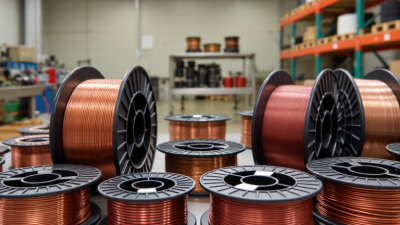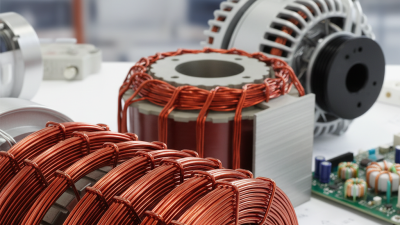
Choosing a Varnished Copper wire manufacturer takes more than comparing prices. Buyers need to understand the wire’s insulation, conductor dimensions, temperature rating, and intended use. A coil may look smooth under warehouse lights, yet still require careful testing before production. Small differences in coating thickness or winding quality can affect handling and performance.
China has manufacturers serving applications such as motors, transformers, and electrical components. Their capabilities vary, so a company’s location or catalog alone cannot confirm that it is the right supplier. This guide introduces practical points for evaluating manufacturers, including product specifications, quality-control procedures, sample testing, production capacity, and communication. Look for clear technical data and ask how the supplier checks insulation consistency, wire diameter, and batch traceability. Useful evidence may include test reports, certifications relevant to the product, and a willingness to discuss application requirements. Verify those details directly; do not treat a polished website as proof.
Details matter. A sample spool, a readable specification sheet, and prompt answers can reveal more than broad sales claims. Still, no checklist guarantees a perfect match. Requirements differ by equipment, operating conditions, and customer quality systems, and some supplier information may need independent confirmation. The comparisons ahead are intended as a starting point, not an endorsement. By weighing technical fit, documented quality, and dependable support, buyers can build a more informed shortlist of Varnished Copper wire manufacturers in China.
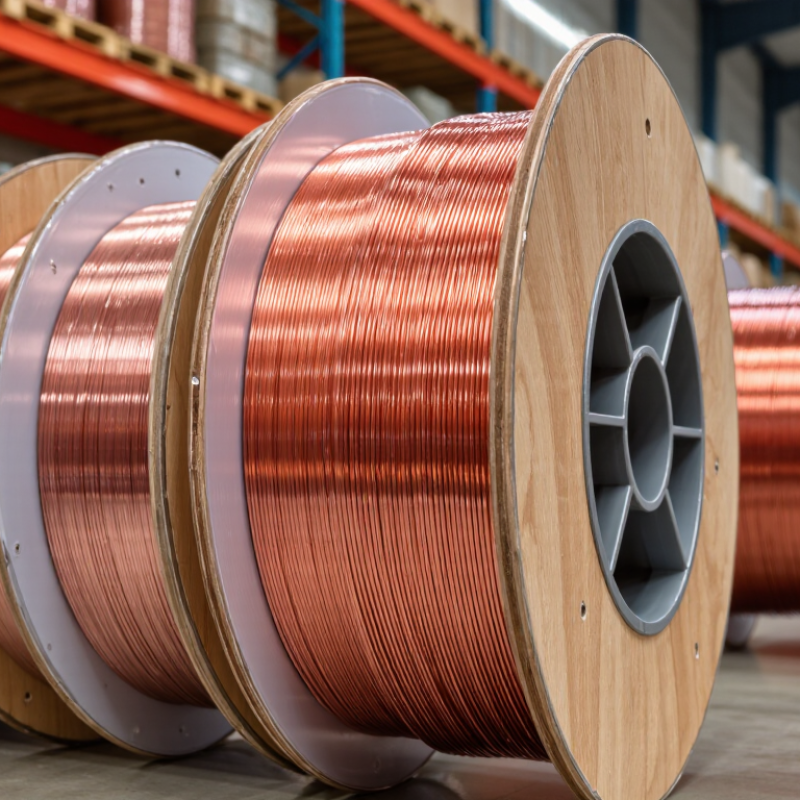
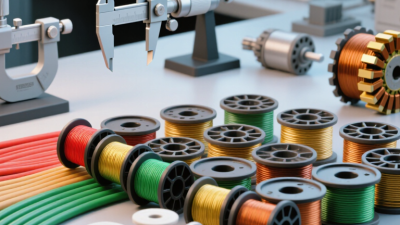
Varnished copper wire, commonly called enamelled copper wire, is a copper conductor covered with a thin insulating coating. The coating is not ordinary decorative varnish. It is made to keep neighboring turns electrically separate when wire is wound tightly into a coil. The copper carries current; the insulation helps control where that current flows.
You may find this wire inside motors, transformers, relays, and compact inductors. A spool can look like bare copper, yet its surface has a clear or colored film. It is thin, but important. Scratches, pinholes, or damage at a sharp bend can expose the conductor and affect a finished winding. Wire selection depends on conductor diameter, insulation build, temperature rating, and the winding process. A finer wire can fit more turns into a small space, but it may be easier to damage during handling. For buyers comparing manufacturers in China, request technical specifications and test records, not just a sample coil. Even so, paperwork cannot show every production variation; incoming checks remain useful.
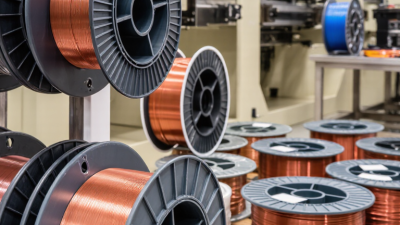
Varnished copper wire begins as a carefully selected copper rod. In Chinese production facilities, the rod is drawn through progressively smaller dies until it reaches the required diameter. Drawing changes the wire’s surface and can make it harder, so annealing restores flexibility. The wire is then cleaned to remove residue that could interfere with insulation. Small details matter.
A coating line guides the moving wire through liquid insulating varnish, often in several thin layers. Each pass adds insulation, while controlled oven heat cures the coating before the next layer is applied. Temperature, line speed, and varnish viscosity need close attention. Too much heat may damage the coating; too little can leave it soft. The process varies with wire size and insulation requirements.
After curing, the wire cools and is wound onto spools under steady tension. Manufacturers may check coating thickness, surface appearance, flexibility, and electrical performance. Tests can reveal pinholes or uneven coverage, though sampling cannot show every flaw in a long coil. This is a practical limitation, not a reason to skip inspection. Production records help trace settings when a batch needs review. Not quite simple. Small adjustments can change the result.
| Manufacturing Stage | What Happens | Key Process Controls | Typical Quality Checks |
|---|---|---|---|
| Conductor material selection | Electrical-grade copper is selected for the required conductivity, mechanical properties, and final wire dimensions. | Copper composition, incoming condition, surface cleanliness, and traceability. | Material documentation, visual inspection, and checks of incoming rod or wire dimensions. |
| Wire drawing | Copper is drawn through progressively smaller dies to reach the specified conductor diameter. Lubrication and die condition help control the surface and dimensions. | Die sequence, drawing speed, lubrication, tension, and finished conductor diameter. | Diameter measurement, surface inspection, and checks for scratches or other defects. |
| Annealing | The drawn copper is heat-treated to restore ductility and provide the required mechanical condition. Depending on the line, annealing may be integrated with drawing or performed separately. | Temperature, exposure time, atmosphere, and cooling conditions. | Elongation, flexibility, and conductor electrical properties as specified for the product. |
| Cleaning and surface preparation | The conductor surface is prepared so the insulating enamel can wet and adhere consistently. | Removal of drawing lubricant and contaminants; control of surface condition before coating. | Visual cleanliness and coating wetting or adhesion checks where required. |
| Enamel application | Insulating varnish or enamel is applied to the moving copper wire. Multiple coating passes are commonly used to build the specified insulation thickness. | Coating formulation, viscosity, applicator condition, line speed, and number of passes. | Insulation build, coating uniformity, and checks for bare spots or surface irregularities. |
| Oven curing | The coated wire passes through a controlled oven to cure the enamel. In solvent-based processes, oven conditions also help remove solvent from the coating. | Oven temperature profile, wire speed, ventilation, and curing conditions appropriate to the coating system. | Appearance, coating integrity, and tests for properties such as adhesion and flexibility. |
| Cooling and take-up | The finished wire is cooled and wound onto reels or spools while maintaining controlled tension. | Cooling, winding tension, spool condition, and prevention of kinks or mechanical damage. | Winding appearance, length or weight checks, and inspection for handling damage. |
| Final electrical and mechanical testing | Samples or production lengths are evaluated against the applicable product specification and customer requirements. | Test method, sampling plan, conductor size, insulation build, and applicable specification. | Depending on the product, checks may include conductor resistance, dielectric breakdown, continuity, dimensions, adhesion, and flexibility. |
| Identification and packaging | Approved wire is labeled with relevant product and lot information, then protected for storage and transport. | Correct product identification, reel protection, packaging integrity, and batch records. | Label and order verification, reel condition, and review of production and inspection records. |
Evaluate a manufacturer through process evidence, not polished catalog claims. Ask for the conductor’s diameter tolerance, enamel thickness range, thermal class, and test method. Request recent batch records showing resistance, insulation continuity, and breakdown-voltage results. Check whether results identify the production lot. A certificate without traceable measurements is weak evidence. Small detail, big difference.
The International Energy Agency’s Global Critical Minerals Outlook 2024 says copper demand for clean-energy technologies could double by 2035. That forecast is not specific to varnished wire, but it signals why stable electrical performance matters. Ask suppliers how they control coating uniformity along continuous wire. A useful audit checks actual reels, packaging, and retained samples—not only a conference-room presentation. Have an independent laboratory test samples against your stated specification, and compare results across separate batches.
No checklist is flawless. A spreadsheet can still mislead. Also confirm lead times, complaint handling, and whether production changes trigger customer notification; these reveal how quality is managed after the first order.
Leading Varnished Copper Wire Manufacturers in China serve motor, transformer, appliance, and electronics makers that need insulated conductors in consistent sizes. Their capabilities often include drawing copper wire, applying enamel, curing coatings in controlled ovens, and checking finished coils. Process details matter. Uneven coating or poor winding can cause trouble during assembly.
When evaluating a supplier, ask for conductor diameter tolerances, insulation build, thermal class, and test methods. Request a sample coil and its inspection records, then compare the wire under your own winding conditions. Look for clear reporting on pinhole checks, elongation, and breakdown voltage. A neat datasheet helps, but it does not replace a batch-specific report. That distinction is easy to miss.
Production scale alone does not prove reliability. Review how the manufacturer handles custom dimensions, packaging, and changes between orders. Ask how it identifies lots and responds when a test result falls outside agreed limits. Even careful factories can have variation; the useful question is whether they detect it and communicate promptly. A supplier’s answers may be imperfect, so record open questions before approving a production run.
Chinese manufacturers of varnished copper wire serve equipment makers across power, transport, and consumer industries. Their products are used in transformers, motors, relays, inductors, and solenoid coils. In a small appliance motor, for example, the wire must wind neatly around a narrow stator slot without scraping its insulation. That detail matters.
Industrial applications often require stable electrical performance during repeated heating and vibration. Manufacturers may offer different conductor diameters, insulation builds, and thermal ratings to suit specific designs. Transformer producers typically focus on predictable winding dimensions and dependable insulation, while motor makers may prioritize flexibility during coil insertion. These needs vary by equipment and operating conditions.
The same wire can also appear in automotive electrical components, pumps, fans, and control devices. Buyers should compare technical data, including conductor tolerance, insulation type, and temperature rating, then request samples for winding trials. A datasheet alone is not enough. Actual coil-forming tests can reveal handling issues that specifications miss. One imperfect point: the right grade is not always obvious from the application name; engineers need to check the wire against the component’s real heat, voltage, and space limits.
Reference thermal-class temperatures used for electrical insulation systems. Applications vary by design and do not indicate manufacturer market share.
Varnished copper wire is commonly used in motors, transformers, generators, household appliances, and industrial drives. The appropriate thermal class depends on the complete insulation system and operating conditions.