Top 10 Types of Copper Wire With Enameled Coating?
Copper Wire With Enameled Coating is essential in motors, transformers, generators, relays, and compact electronic assemblies. Its thin insulating film allows more copper to fit into limited winding space. That small advantage can improve efficiency, heat management, and equipment reliability.
This guide examines ten practical types used by manufacturers and repair professionals. They include round, rectangular, solderable, bondable, self-bonding, heavy-build, and different thermal-grade enamel wires. Each type responds differently to winding tension, operating temperature, abrasion, and connection methods. Polyurethane enamel may support easier soldering, while polyester-imide systems often provide stronger thermal performance. Polyimide coatings can suit demanding environments, but they may require specialized stripping methods.
Details matter.
Wire size affects resistance, current capacity, and winding density. Coating thickness affects insulation strength and available slot space. A reliable selection should consider the motor’s thermal class, voltage requirements, mechanical stress, and applicable IEC or NEMA guidance. Datasheets remain essential because similar product names can hide different temperature ratings or chemical resistance.
Practical experience also reveals trade-offs. A wire that winds smoothly may not be the easiest to solder. A thicker coating can improve durability, yet reduce copper fill. No single list is perfect. Manufacturing conditions, equipment design, and maintenance practices can change the best choice. By comparing construction, enamel chemistry, performance, and typical applications, this overview helps engineers and buyers select Copper Wire With Enameled Coating with greater confidence and fewer costly assumptions.
What Enameled Copper Wire Is and How Its Insulation Works
Top 10 Types of Copper Wire With Enameled Coating?
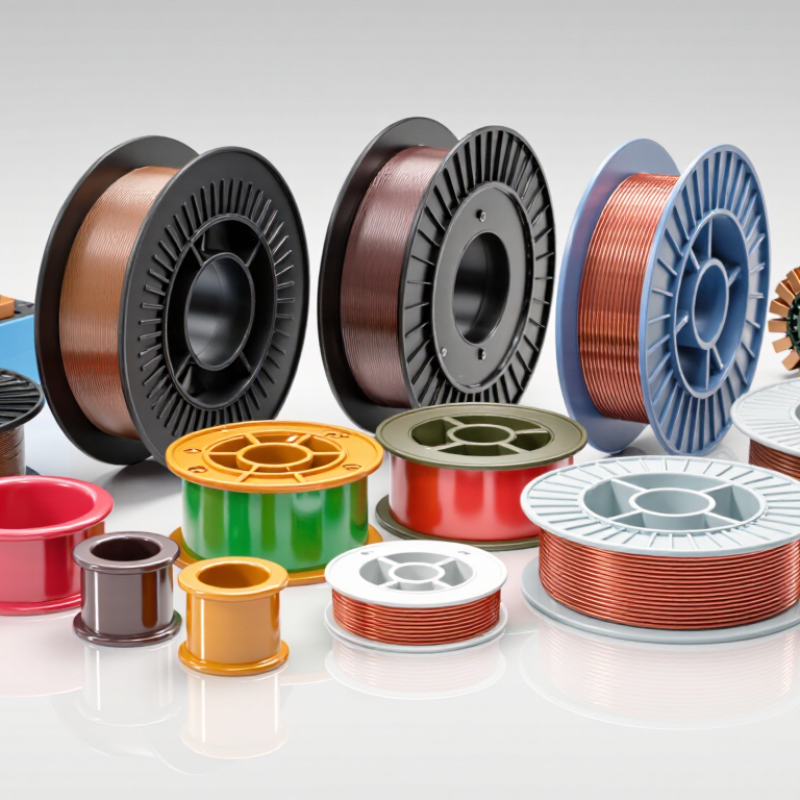
Enameled copper wire uses a thin polymer film instead of textile or plastic tubing. The coating separates adjacent turns and prevents short circuits inside coils. Common insulation classes include 105, 130, 155, 180, 200, and 220°C. Higher classes tolerate greater heat, but they do not make a motor indestructible. IEC 60317 defines requirements for many enamelled winding-wire constructions, including diameter, thermal performance, and coating integrity.
Wire geometry changes its role. Round wire bends easily and suits compact motor windings. Rectangular wire fills slots more efficiently and can improve copper utilization. Self-bonding wire adds a bonding layer for stronger formed coils. Solderable wire reduces coating removal during assembly. These options support transformers, generators, compressors, electric vehicles, and high-frequency inductors.
Demand is becoming more significant. The International Energy Agency reported nearly 14 million electric-car sales worldwide in 2023. Each traction motor depends on tightly wound, heat-resistant copper conductors. The International Copper Study Group estimated global refined copper usage at roughly 26 million tonnes in 2024, reflecting continued demand from electrification and power equipment. Still, selecting wire by temperature class alone is incomplete. Designers must check voltage stress, slot abrasion, chemical exposure, bending radius, and partial-discharge resistance. In real workshops, enamel damage can appear as a tiny scrape near a sharp slot edge. That small flaw may defeat an otherwise excellent insulation system. 恒一
The Main Standards for Classifying Enameled Copper Wire
Top 10 Types of Copper Wire With Enameled Coating
The main standards classify enameled copper wire by conductor shape, insulation system, thermal class, and performance. Round wire suits motors and transformers, while rectangular wire improves slot filling. Stranded versions provide better flexibility. Coating families may include polyester, polyesterimide, polyamide-imide, polyurethane, and self-bonding enamel. Each design serves a different winding process.
IEC 60317 provides widely used specifications for dimensions, insulation, and test methods. NEMA MW 1000 is another important reference for magnet wire requirements. Japanese and regional standards may use different designations, so buyers should compare the actual test values. Thermal classes, such as 155°C, 180°C, and 200°C, indicate rated heat resistance. They do not guarantee unlimited service at those temperatures. Testing commonly includes breakdown voltage, pinhole detection, elongation, flexibility, and heat shock. Small differences matter. A wire may pass one test yet perform poorly after repeated bending.
Tips:
Confirm the conductor diameter, coating thickness, thermal class, and standard edition before ordering. Ask for a test report, not only a product label. Check solderability when production uses direct soldering. Self-bonding enamel can simplify coil forming, but bonding temperature must match the process. In practice, classification tables can look clear, yet conversion between standards is not always exact. This is where careful review prevents an expensive mismatch.
How to Match Wire Types with Electrical and Industrial Applications
Choosing among the top 10 types of enamelled copper wire depends on heat, voltage, motion, and winding space. Round polyurethane wire suits compact transformers and small motors because its coating is thin and often solderable. Polyester wire offers economical insulation for general coils. Polyesterimide wire handles higher temperatures in industrial motors. Polyesterimide with polyamide-imide adds stronger abrasion resistance and improved thermal endurance. Solderable polyurethane wire reduces stripping work during terminal connection.
Self-bonding wire uses an adhesive layer to stabilize voice coils, precision motors, and shaped windings. Corona-resistant wire is better for inverter-fed motors, where fast voltage pulses can damage ordinary enamel. Polyimide wire supports demanding high-temperature assemblies, including aerospace and specialized heating equipment. Rectangular enamelled wire fills slots efficiently in traction motors and high-power generators. Enamelled litz wire, made from individually insulated strands, helps reduce skin-effect losses in high-frequency transformers.
Application matching should begin with the actual operating temperature, not only the catalog rating. Measure the winding temperature near hot spots. Check voltage stress, bending radius, solvent exposure, and required mechanical strength. A small motor may benefit from solderable polyurethane wire, while a large variable-speed motor may need corona-resistant insulation. Tight slots favor rectangular conductors, but poor forming practice can damage their enamel. Litz wire can improve efficiency, yet its termination is more demanding. In my experience, selecting the thinnest coating is not always wise. It saves space, but handling defects may increase. Test a sample winding under heat and vibration before approving full production.
Top 10 Types of Copper Wire With Enameled Coating
Typical continuous thermal classes and suitable electrical or industrial applications. Thermal classes are based on commonly used IEC 60317 and NEMA MW insulation categories; the exact rating depends on the complete wire construction and test standard.
Lower-temperature polyurethane and polyester wires are commonly selected for compact coils, transformers, relays, and general motor windings. Polyester-imide, polyamide-imide, and polyimide systems are better suited to high-temperature motors, generators, traction equipment, aerospace systems, and other demanding industrial applications.
Factors for Choosing the Right Enameled Copper Wire】【。
Choosing among the top ten types of enameled copper wire starts with the application, not the catalogue. Thermal class is critical. Class 155 wire may suit moderate motor temperatures, while Class 200 or 220 supports hotter windings. IEC 60317 standards define insulation requirements, but actual performance depends on varnish, tension, and manufacturing control. I check conductor diameter, resistance, elongation, and breakdown voltage before selecting a spool. Small errors matter. A 0.05 mm diameter change can affect slot fill and coil resistance.
Operating conditions also shape the decision. High-frequency transformers may need a thin coating and low-loss construction. Compact motors often require strong abrasion resistance during winding. In humid areas, moisture resistance and chemical stability deserve closer attention. The U.S. Department of Energy reports that motor systems consume more than half of industrial electricity in the United States. Efficient winding design therefore has measurable energy consequences. The International Energy Agency recorded more than 14 million electric car sales globally in 2023, representing about 18% of new car sales. Electrification is expanding, but not every project needs the same copper wire.
I also review solderability, flexibility, thermal cycling, and available testing records. A wire that performs well on paper can fail after repeated bending. That part is often underestimated. There is no universal best type. Cost pressure can encourage thinner insulation, yet premature enamel damage may create greater losses. Selection should match voltage, frequency, temperature, winding speed, and the evidence supplied by the manufacturer.