What Is Polyester Coated Chain Link Fence?
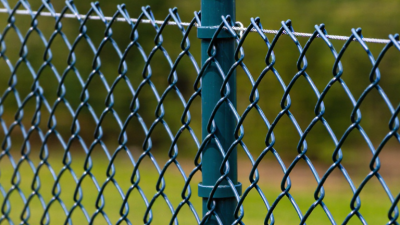
Polyester Coated Chain Link is a practical fencing system built for strength, visibility, and improved weather resistance. It begins with steel wire, usually protected by zinc, then receives a polyester coating in a selected color. The result feels smoother than bare galvanized wire. It also looks less industrial.
Fencing specialist Mark P. Miller explains, “A coating works best when the steel beneath it is prepared correctly.” That detail matters. A green or black finish cannot repair weak wire, poor galvanizing, or careless installation. Inspect the mesh closely. Look for even color, consistent coating thickness, and clean bends around the fence posts. Scratches near gates deserve attention because moving hardware creates repeated abrasion.
In coastal areas, polyester coating can reduce direct exposure to moisture and salt. It is not a perfect shield. Small cuts, trapped water, and damaged fittings may still encourage corrosion. Drainage matters too. A fence installed directly in muddy soil may age faster than expected.
This guide examines what Polyester Coated Chain Link is, how it is manufactured, and where it performs well. It also considers limitations that product descriptions sometimes overlook. Mesh gauge, zinc protection, coating quality, framework, and installation technique all influence service life. A beautiful surface helps, but it is only one part of a dependable fence.
Polyester-Coated Chain Link Fence: Definition and Core Construction
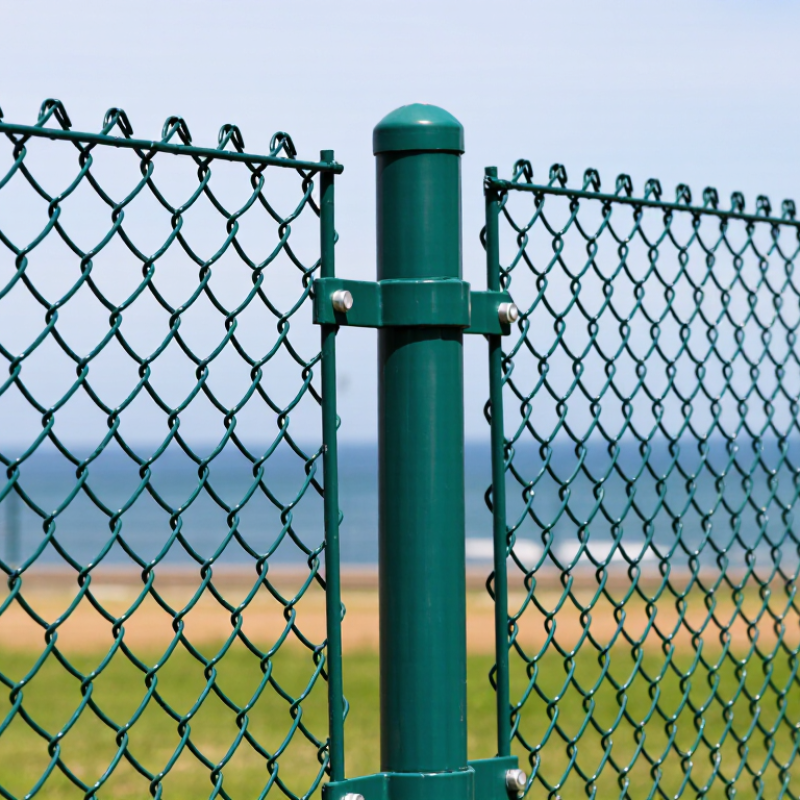
Polyester-coated chain link fence is woven steel mesh protected by a polyester polymer layer. Its core construction starts with low-carbon steel wire, usually zinc-coated before polymer application. The wire is bent into continuous diamond-shaped links, then assembled into rolls. Line posts, terminal posts, rails, tension wire, and fittings complete the fence system.
The coating is not the structural core. It acts as a barrier against moisture, salt, and surface abrasion. ASTM F668 covers polymer-coated steel chain link fabric, while ASTM A817 addresses zinc-coated wire used in this type of fencing. These standards separate wire strength, coating adhesion, and dimensional performance.
That distinction matters. A thick-looking finish cannot repair weak wire or poor weaving.
A 2024 global fencing market assessment estimated the sector above USD 30 billion, with coated steel products gaining attention in residential and commercial projects. Construction spending data from the U.S. Census Bureau also exceeded USD 2 trillion in 2023, reflecting continued demand for durable site boundaries. Field experience shows that cut edges, damaged corners, and standing water often cause early corrosion. Polyester helps, but it is not magic. Installers still need sealed cuts, correct post depth, and proper drainage. One overlooked detail can shorten the fence’s service life.
Steel Wire Gauges, Mesh Sizes, and Common 2–6 m Fence Heights
What Is Polyester Coated Chain Link Fence?
Polyester coated chain link fence uses steel wire with a protective polymer layer. The coating improves color retention and reduces direct moisture contact. Galvanized steel usually forms the base layer. Polyester is then applied as a tougher, smoother finish. ASTM F668 and EN 10223-6 provide recognized guidance for coated chain link fabric, wire dimensions, and performance testing.
Wire gauge controls strength. Common choices include 11.5 gauge, about 2.77 mm, 11 gauge, about 3.05 mm, and 9 gauge, about 3.76 mm. Measurements can differ between gauge systems. Confirm the actual wire diameter. Mesh openings commonly range from 40 to 60 mm. Smaller mesh limits hand access and resists forced deformation better. Larger mesh costs less but feels less rigid.
Fence heights from 2 to 6 m suit different applications. A 2 m fence is practical for property boundaries and general security. Heights of 3–4 m often serve sports grounds or industrial yards. Six-metre systems need stronger posts, deeper foundations, and careful wind calculations. A heavy wire does not automatically make a tall fence safe. That assumption is easy to make. ASTM F668 testing and local structural requirements should guide the final specification. In exposed coastal or high-wind areas, coating quality, drainage, and post bracing deserve equal attention. I would not choose height alone. The overlooked detail is often the foundation.
Polyester Powder Coating: Typical 60–100 μm Film Thickness
What Is Polyester Coated Chain Link Fence?
A polyester coated chain link fence uses galvanized steel wire with a cured polyester powder layer. The powder bonds during oven heating, creating a smooth surface with consistent color and texture. It also adds another barrier against moisture, sunlight, and everyday abrasion.
Typical dry-film thickness is 60–100 μm, or approximately 2.4–3.9 mils. This range is practical, not magical. ISO 2808 describes methods for measuring coating thickness, while ASTM D7091 supports non-destructive readings on metallic substrates. Measurements should cover wire crowns, bends, and cut ends. Thin areas often appear near corners and tight overlaps.
Coating performance depends on more than thickness. ISO 12944-5 connects corrosion protection with preparation, environment, coating design, and film thickness. ASTM B117 uses a controlled salt-spray test with a 5% sodium chloride solution, but its results do not equal outdoor service years. That limitation matters. A fence beside a roadway may face salt, grit, and repeated impact, even when its average film reads 80 μm.
During inspection, request several readings instead of one impressive number. Check adhesion, curing, surface cleanliness, and exposed cut wire. A small thickness variation is normal. Large variation deserves investigation. The 60–100 μm target remains useful, but installation conditions can quietly decide the fence’s real service life.
Performance Factors: Corrosion Resistance, UV Stability, and Service Life
What Is Polyester Coated Chain Link Fence?
Polyester coated chain link fence uses a polymer layer over steel wire, often with a galvanized base. The coating creates a physical barrier against moisture, oxygen, and road salts. Corrosion protection still depends on the wire’s zinc layer and coating thickness. A thin, scratched surface can expose steel quickly. Details matter.
The NACE IMPACT study estimated that corrosion costs the global economy about 3.4% of worldwide GDP, or roughly 2.5 trillion US dollars annually. This figure explains why coating selection deserves engineering attention. ASTM F668 covers polymer-coated steel chain link fabric, while ASTM B117 can evaluate salt-spray resistance. However, salt-spray hours do not predict outdoor service life perfectly. Real fences face drainage problems, soil contact, animal damage, and cut edges.
UV stability is equally important in exposed locations. Testing under ASTM G154 can compare color fading, cracking, and surface chalking after accelerated ultraviolet exposure. Polyester usually resists sunlight better than many basic coatings, but performance varies with pigment, resin quality, film thickness, and local climate. Coastal air can shorten protection. So can intense desert heat. Service life should be estimated from coating tests, wire diameter, installation quality, and maintenance records, not from a single warranty number. I would not promise a fixed lifespan without site data. That is the uncomfortable part.
What Is Polyester Coated Chain Link Fence?
Typical estimated service life by exposure environment
Polyester coating adds a UV-resistant barrier over galvanized steel, helping reduce corrosion and color degradation. Typical service life is influenced by zinc protection, coating thickness, sunlight, humidity, salt exposure, installation quality, and maintenance. The ranges shown are representative planning values for properly installed fencing, not a product warranty.