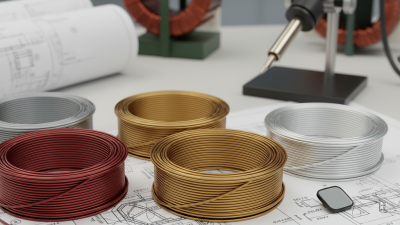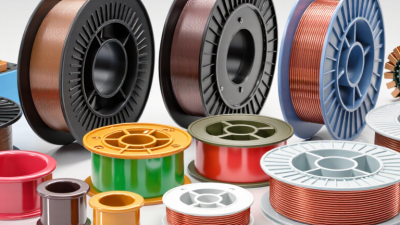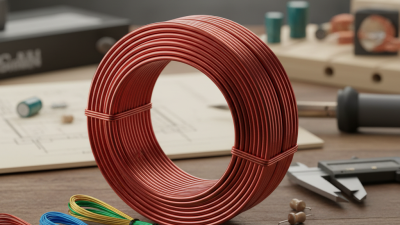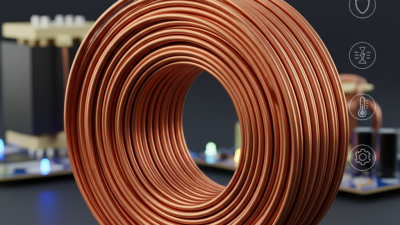
Choosing the right Enameled Magnet Wire supplier can shape motor efficiency, transformer reliability, and long-term production costs. A dependable supplier offers more than a polished catalogue. It should provide stable insulation performance, accurate conductor dimensions, and traceable quality records.
This guide examines seven leading suppliers worldwide through practical purchasing criteria. We consider wire sizes, enamel insulation systems, thermal classes, order flexibility, and technical support. Certifications matter, but they do not tell the entire story. Delivery consistency matters too. A factory may meet a specification once, yet struggle with repeated orders or urgent production changes.
Real applications reveal the difference. A fine wire used in a compact fan motor needs careful coating control and clean winding behavior. Larger wire for industrial transformers may demand stronger abrasion resistance and predictable thermal endurance. Supplier experience with these conditions deserves close attention.
The selection also considers regional service, export capability, documentation, and communication during technical reviews. Buyers should confirm test methods, tolerances, packaging standards, and compliance requirements before placing an order. Small gaps can become expensive failures.
There is no universal winner. A supplier strong in high-volume automotive production may not suit a specialty coil manufacturer. Rankings can also change as capacity, pricing, and technology develop. That uncertainty deserves honest consideration.
Use this overview as a research starting point, not a substitute for samples and qualification testing. The best choice combines verified performance, responsive support, and dependable supply for your specific application.
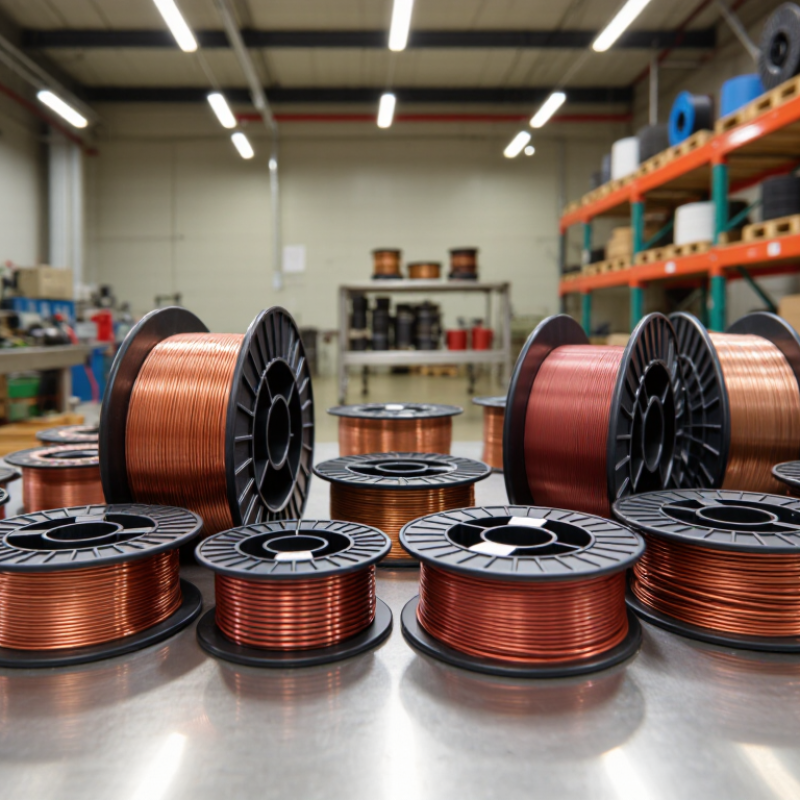
Enameled magnet wire is a metal conductor covered with a thin insulating enamel layer.
Copper is common, while aluminum offers lower weight and cost. The coating prevents short circuits between adjacent turns. It also protects the conductor from moisture, heat, and mechanical damage.
Common types include polyurethane, polyester, polyesterimide, and polyamide-imide wire. Single-coat designs suit moderate temperature and general winding work. Dual-coat wire adds stronger abrasion and thermal resistance.
Thermal classes often range from 130°C to above 200°C. However, temperature rating alone does not determine performance. Flexibility, solderability, dielectric strength, and coating thickness also matter. A thinner coating saves winding space. It may provide less mechanical protection.
Applications include motors, transformers, generators, relays, ignition coils, and compact electronic components. Electric vehicle motors often require high thermal endurance and excellent resistance to vibration. Transformer windings need reliable insulation between tightly packed layers.
In production, engineers should check conductor diameter, enamel adhesion, pinhole resistance, and compliance with recognized specifications such as IEC 60317 or NEMA MW 1000.
A practical warning: the thinnest wire is not automatically the best choice. It can increase copper density but complicate stripping and repair. The ideal selection depends on voltage, frequency, winding tension, cooling, and expected service life. Real testing still matters.
7 Best Enameled Magnet Wire Suppliers Worldwide
How to Evaluate Global Enameled Magnet Wire Suppliers
Evaluating global enameled magnet wire suppliers requires more than comparing prices. Start with documented production experience, stable capacity, and clear technical communication. Ask how long the supplier has produced wire for motors, transformers, or high-frequency coils. A useful supplier should provide insulation class, conductor tolerance, coating thickness, elongation, and thermal aging data. Do not accept vague terms.
Request samples from the same production line used for regular orders. Inspect the spool edges, surface uniformity, and winding tension. Laboratory checks should include pinhole detection, breakdown voltage, solderability, and resistance at defined temperatures. Test reports should identify methods, dates, and sample numbers. Traceability matters. Each shipment should connect to a batch record and inspection result.
Supply reliability also deserves close attention. Review lead times, minimum order quantities, packaging quality, and contingency plans for copper or coating shortages. Confirm whether the supplier can support custom dimensions without weakening insulation performance. A factory tour, video audit, or independent inspection can reveal gaps that brochures hide. Still, audits are only snapshots. I once treated a strong sample as proof of consistent quality, which was a mistake. Repeat testing is necessary. Regional certifications, export documents, and material declarations should match the destination market. Clear answers usually indicate mature quality control, but silence is information too.
| Supplier Profile | Primary Manufacturing Region | Core Product Focus | Conductor Materials | Insulation Families Commonly Offered | Applicable Standards | Typical Application Strength | Customization Capability | Evaluation Score |
|---|---|---|---|---|---|---|---|---|
| Supplier Profile 01 | East Asia | High-volume round enameled copper wire | Oxygen-free and electrolytic copper | Polyurethane, polyester, polyesterimide, polyamide-imide | IEC 60317; NEMA MW 1000; JIS C 3202 | Motors, transformers, relays, household appliances | High; fine wire, thermal classes, bonding options | 9.1 / 10 |
| Supplier Profile 02 | Western Europe | Premium automotive and traction wire | Copper and aluminum | Polyesterimide, polyamide-imide, high-temperature systems | IEC 60317; NEMA MW 1000; automotive customer specifications | Electric vehicle motors, generators, traction systems | Very high; rectangular wire and inverter-duty solutions | 9.3 / 10 |
| Supplier Profile 03 | North America | Industrial magnet wire and specialty conductors | Copper, aluminum, tinned copper | Polyurethane, polyester, polyesterimide, polyamide-imide | NEMA MW 1000; ASTM; IEC 60317 | Industrial motors, transformers, HVAC equipment | High; custom insulation build and conductor formats | 8.8 / 10 |
| Supplier Profile 04 | South Asia | Cost-efficient winding wire for electrical equipment | Electrolytic copper and aluminum | Polyurethane, polyester, polyesterimide | IEC 60317; IS; NEMA MW 1000 | Distribution transformers, pumps, fans, compressors | Medium to high; standard sizes and selected custom builds | 8.4 / 10 |
| Supplier Profile 05 | Southeast Asia | General-purpose and export-oriented magnet wire | Copper and aluminum | Polyurethane, polyester, polyesterimide | IEC 60317; JIS C 3202; NEMA MW 1000 | Small motors, appliances, lighting ballasts, transformers | Medium; standard insulation grades and packaging formats | 8.1 / 10 |
| Supplier Profile 06 | East Asia | Fine and ultra-fine wire for compact components | High-purity copper and silver-bearing copper | Polyurethane and self-bonding insulation systems | IEC 60317; JIS C 3202; applicable customer specifications | Sensors, voice coils, micro-motors, high-frequency components | Very high for fine wire; limited heavy-gauge capacity | 8.9 / 10 |
| Supplier Profile 07 | Central and Eastern Europe | Energy, generator, and heavy-duty winding wire | Copper and aluminum | Polyesterimide, polyamide-imide, high-temperature enamel systems | IEC 60317; EN; NEMA MW 1000 where specified | Generators, industrial motors, wind-turbine equipment | High; large conductors, rectangular wire, demanding thermal classes | 8.7 / 10 |
Seven Leading Enameled Magnet Wire Suppliers Worldwide
The seven leading enameled magnet wire suppliers serve motors, transformers, generators, and compact electronic assemblies. Their strengths differ by application, not by reputation alone. A European precision producer may offer tight diameter control for miniature coils. A Japanese manufacturer may emphasize stable insulation and heat resistance. A North American supplier often supports custom gauges and engineering consultations. A large East Asian producer can provide high-volume supply with broad coating options. A South Korean specialist may focus on high-frequency and inverter-duty wire. An Indian supplier can offer flexible production for regional manufacturers. A Central European supplier may provide shorter delivery routes across nearby markets.
Real purchasing decisions require more than a catalog. I examine conductor diameter, enamel thickness, thermal class, elongation, and breakdown voltage. Sample testing matters. A wire can look smooth yet fail during winding tension tests. Suppliers should provide batch traceability, inspection records, and clear compliance documentation. Their production equipment should support consistent coating across long reels.
No shortlist is perfect. Pricing may hide higher scrap rates or longer lead times. I have also seen technically suitable wire delayed by packaging weaknesses and moisture exposure. Buyers should request sample reels, confirm storage conditions, and compare results under actual winding speeds. Reliable suppliers communicate limitations honestly, even when the answer is inconvenient. That behavior often matters more than polished sales material.
7 Best Enameled Magnet Wire Suppliers Worldwide
Choosing among the seven strongest enameled magnet wire suppliers requires more than comparing price lists. The International Energy Agency estimates that motor-driven systems consume about 46% of global electricity. This makes winding efficiency, thermal stability, and insulation reliability important purchasing factors. Experienced suppliers should provide conductor size tolerances, enamel-class data, dielectric breakdown results, and traceable production records. Ask for test samples, not promises.
Quality differences often appear in practical details. A capable supplier can support round, rectangular, and self-bonding wire, with controlled film thickness and customized thermal ratings. Compliance with IEC 60317, NEMA MW 1000, or relevant UL insulation-system requirements improves technical confidence. Customization may include spool dimensions, lubrication levels, solderability, and delivery lengths. However, a thick coating is not automatically better. It can reduce copper fill and complicate high-density winding.
Look for suppliers using statistical process control and batch-level inspection. Request data on elongation, pinhole counts, abrasion resistance, and heat-shock performance. These details reveal more than a polished catalog. The IEA’s efficiency research also shows why small motor losses matter across large equipment fleets. Still, published market reports often use different definitions, so comparisons can be imperfect. I would verify every claimed figure through an independent laboratory or witnessed factory audit. A low quotation may conceal longer lead times, inconsistent coating, or costly rework. Stay skeptical.
Selecting among seven leading enameled magnet wire suppliers requires more than comparing price per kilogram. Your winding process comes first. Check conductor diameter tolerance, enamel thermal class, dielectric breakdown, bondability, and winding speed. Request samples from each supplier, then test them on your actual coils. Laboratory data can look excellent, yet insulation may crack around a sharp slot edge.
The IEA’s Electricity 2024 report forecasts average global electricity demand growth of 3.4% from 2024 to 2026. This supports rising demand for motors, transformers, and compact power equipment. A dependable supplier should show stable capacity, not only attractive quotations. Ask for production lead times, minimum order quantities, batch traceability, and corrective-action records. ISO 9001 certification helps, but it does not replace your own audit. Look closely at process controls.
Copper availability also deserves attention. The USGS Mineral Commodity Summaries 2025 reported approximately 22 million metric tons of mined copper production worldwide in 2024. Supply can still tighten by region, grade, or transport route. Ask whether the supplier maintains qualified backup sources and local inventory. My practical mistake was trusting a familiar specification sheet too quickly. It missed enamel performance after repeated thermal cycling. Retest samples after heat, vibration, and humidity exposure. No scorecard is perfect. Weight technical consistency above short-term savings.
When comparing enameled magnet wire suppliers, prioritize insulation thermal class, conductor material, dimensional consistency, electrical performance, compliance documentation, delivery capability, and customization support. The chart below shows standardized thermal endurance classes commonly used when specifying magnet wire.
How to use this benchmark: Match the wire’s thermal class to the operating temperature of your motor, transformer, generator, or coil. A higher thermal class can improve temperature tolerance, but the final selection should also consider conductor size, insulation thickness, dielectric strength, flexibility, solderability, and applicable standards.