How to Choose the Right Aluminum Wire Coating for Your Needs?
Choosing the right aluminum wire coating is crucial for various applications. The coating impacts durability, conductivity, and resistance to corrosion. Different industries utilize aluminum wire coatings for distinct purposes, making selection all the more essential.
When considering aluminum wire coating, understanding your specific needs is vital. Factors such as environmental conditions, wire usage, and longevity play a significant role. Selecting the wrong coating can lead to unexpected failures.
A knowledgeable choice means balancing performance with cost. Reflecting on your priorities helps narrow down options. Look for coatings proven in real-world applications. Seeking expert advice can also guide you to the best solution. Making the right decision today ensures reliability tomorrow.
Understanding the Types of Aluminum Wire Coatings Available
When selecting aluminum wire coatings, it is essential to understand the different types available. Various coatings offer unique benefits tailored to specific applications. For instance, many users opt for polyurethane coatings due to their durability. This type withstands environmental wear and is resistant to scratches. It's ideal for outdoor applications that demand longevity.
Another common option is PVC coating. Its attractive appearance appeals to many. Yet, PVC may not perform as well in extreme temperatures. Users need to evaluate their environment before making a decision. There are also polyester coatings, known for their flexibility. They are often used in automotive applications due to their resistance to chemicals.
Every type has its strengths and weaknesses. Users may experience some challenges when facing specific conditions. For certain situations, none may be perfect. Reflecting on these factors is crucial when determining what will work best. Think critically about your needs. Don't rush the decision-making process. Each coating represents a commitment to a particular solution. Understanding this can lead to a more informed choice.
Evaluating Environmental Factors for Wire Coating Selection
When selecting the right aluminum wire coating, environmental factors play a crucial role. Different coatings react variably to specific conditions such as humidity, temperature, and exposure to chemicals. For instance, coatings that excel in dry conditions may deteriorate rapidly in moist environments. A study by the Aluminum Association indicates that approximately 30% of premature coating failures can be attributed to inadequate consideration of environmental conditions.
Corrosion resistance is another critical consideration. Studies reveal that certain coatings perform better in acidic or alkaline settings. Coatings like anodized finishes can withstand harsher environments, making them suitable for outdoor applications. In contrast, organic coatings might be less expensive but may require more frequent replacements in challenging conditions. In fact, data suggests that coatings exposed to saltwater environments can lose up to 40% of their effectiveness within the first two years.
Choosing an appropriate coating also requires an understanding of potential wear from mechanical stress. Coatings must adhere without compromising the wire's functionality. Research indicates that improper coating selection could lead to a significant increase in maintenance costs, impacting the overall efficiency of operations. Therefore, evaluating these factors ensures that wire installations remain durable and reliable in their intended settings.
Environmental Factors Affecting Aluminum Wire Coating Selection
Assessing Electrical and Thermal Conductivity Requirements
When choosing aluminum wire coatings, understanding electrical and thermal conductivity is crucial. Coatings vary in insulation properties. For instance, thermoplastic coatings are known for good electrical insulation. They protect wires from moisture but might not handle high temperatures well.
Thermal conductivity also matters. Some applications require heat dissipation. Consider how the coating will react under stress. Polymeric coatings can break down when exposed to excessive heat. Assess the specific environment where the wire will be used. Is it exposed to extreme temperatures? That will affect your decision.
Don’t forget about real-world circumstances. Sometimes, coatings fail to perform as expected. Over time, they may degrade or lose adhesion. The thickness of the coating also plays a role. Thicker coatings might offer more durability but can lead to lower conductivity. Always test samples before making large purchases. This practice can identify potential issues.
Analyzing Durability and Corrosion Resistance of Coatings
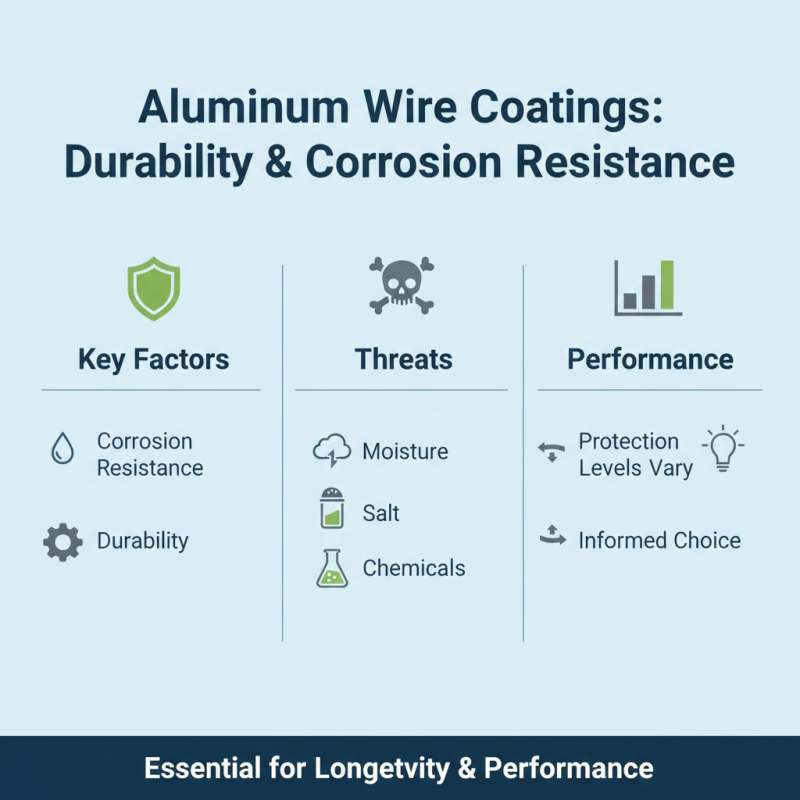
Choosing the right aluminum wire coating is essential for performance and longevity. Corrosion resistance and durability are critical factors. Different coatings offer varying protection levels against moisture, salt, and chemicals. Understanding these options can help you make an informed choice.
For maximum durability, consider coatings like polyurethane or epoxy. These provide exceptional resistance to harsh environments. However, they may be more expensive. Assess the environmental conditions where the wire will be used. If the wire faces aggressive elements, investing in a high-quality coating is wise.
**Tips:** Always check the coating thickness. A thicker layer often means better protection. Also, remember that maintenance is crucial. Regular inspections can identify any signs of wear early on. Don’t underestimate the impact of mechanical damage; coatings can wear down over time.
Comparing Cost-Effectiveness and Application Methods of Coatings
Choosing the right aluminum wire coating involves understanding both cost-effectiveness and application methods. Industry reports indicate that the global aluminum wire market is projected to grow significantly. A study conducted by Research and Markets noted a CAGR of 4.2% from 2021 to 2026, highlighting the increasing demand for efficient coatings.
When evaluating coatings, consider the application method. For example, powder coating is widely used in various industries. It provides a durable finish while minimizing waste. Conversely, liquid coatings offer versatility but may lead to higher costs due to solvent use and disposal expenses. According to a 2022 report from Coatings World, the cost of powder coating can be around 20-30% less over its lifecycle compared to traditional methods.
However, the choice isn't always straightforward. Certain coatings may not perform well in specific environments, leading to premature failure. In terms of performance, data suggests that 15% of coatings underperform, driven by application errors or improper material selection. It’s crucial to weigh the long-term benefits against immediate costs. Sometimes, a cheaper option might lead to more frequent replacements, so a careful examination is necessary for an informed decision.
How to Choose the Right Aluminum Wire Coating for Your Needs?
| Coating Type |
Cost per Meter |
Common Applications |
Durability |
Temperature Resistance (°C) |
| Polyester |
$0.15 |
Low voltage applications, flexible circuits |
Moderate |
-40 to 105 |
| Polyamide (Nylon) |
$0.18 |
Automotive wiring, appliances, electronic devices |
High |
-40 to 150 |
| PVC |
$0.10 |
General purpose wiring, construction |
Low |
-20 to 90 |
| Enameled |
$0.25 |
Electric motors, transformers |
Very High |
-40 to 180 |
| Silicone |
$0.35 |
High-temperature applications, aerospace |
High |
-60 to 200 |