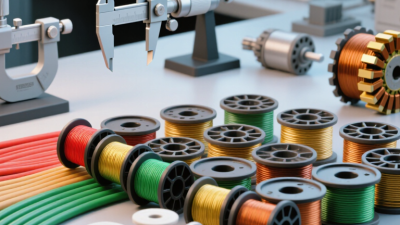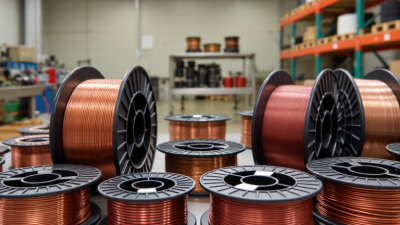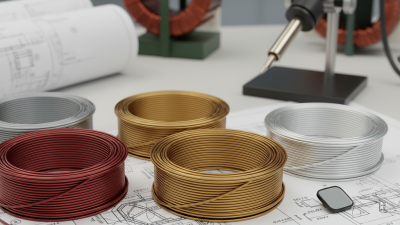
Choosing the best Aluminum Wire Coating in 2026 depends on how the wire will be used, not on a single “best” label. A winding inside a motor faces heat and repeated vibration. A wire routed outdoors may instead face moisture, sunlight, and abrasion. One answer rarely fits every job. The coating must protect the aluminum without making the wire too stiff, thick, or difficult to process. That distinction matters. A smooth finish can look convincing, yet still crack when bent around a tight guide.
This guide compares common coating options by their practical performance: electrical insulation, corrosion resistance, temperature tolerance, adhesion, flexibility, and cost. For magnet wire, an enamel coating may suit compact windings, while other polymer coatings may be considered for different exposure and handling needs. The correct choice depends on the wire design and the manufacturer’s verified specifications. Check coating thickness, temperature rating, and test data—not just a product description. Small details count. A coating can pass a simple visual check and still perform poorly after heat cycling or repeated flexing. No coating removes the need for correct storage, installation, and application-specific testing. That is an important limitation. We’ll look at what each option can realistically do, where trade-offs appear, and which questions to ask before specifying a product. The final choice should fit the operating conditions, not merely the most impressive claim.
A wire’s coating is more than a finish. It separates the aluminum conductor from nearby materials, helping prevent electrical contact, moisture damage, and abrasion. In many installations, the insulating jacket also helps manage heat. The right choice depends on where the wire runs, not just its price or appearance. Details matter.
Common options include PVC for many general-purpose applications, cross-linked polyethylene for demanding heat and moisture conditions, and silicone insulation where flexibility and higher temperatures are important. Bare aluminum can also develop an oxide layer, but that natural surface is not a substitute for purpose-designed electrical insulation. A coating cannot fix an undersized conductor or a poor connection. I would not call one material best for every job; real installations have too many variables.
Tips: Check the wire’s temperature rating, voltage rating, and intended environment before choosing. For outdoor or damp locations, verify that the complete wire assembly is rated for those conditions. Inspect for cuts, flattened areas, or exposed metal, especially near bends and terminals. Small details are easy to miss. When specifications are unclear, consult a qualified electrician or the applicable product documentation rather than guessing.
Aluminum wire uses different coatings for different jobs; there is no universal best. Building wire commonly has polymer insulation, such as polyvinyl chloride (PVC), polyethylene (PE), or cross-linked polyethylene (XLPE). These layers help resist moisture, abrasion, and electrical contact. The right choice depends on heat, installation conditions, and flexibility needs. The terminology gets messy: insulation is often called a coating, though it is usually a thicker protective layer.
For tightly wound motor and transformer windings, enamel coatings provide thin electrical insulation without adding much bulk. Some specialized conductors or contact applications use metallic finishes, including tin or nickel, for surface or connection requirements. They do not replace the wire’s electrical insulation.
Aluminum also forms a natural oxide layer, so connection design matters; a coating alone does not guarantee a reliable joint. I would check the wire’s rated temperature and intended use before comparing coating names.
Demand context matters, but it does not identify a winning coating. The International Energy Agency’s Electricity 2024 report forecasts average global electricity-demand growth of 3.4% per year from 2024 to 2026. That growth supports the need for dependable conductors, while coating selection still comes down to the application and verified product ratings.
Short answer: match the layer to the job.
The best coating depends on what the aluminum wire must withstand. Its thin oxide layer helps resist corrosion, but it does not provide electrical insulation or protect against repeated rubbing. For winding wire, enamel coatings are common. Polyester-imide offers useful heat resistance and a smooth, compact layer. A polyamide-imide topcoat can improve abrasion and chemical resistance, though it may add cost and complicate processing.
Harder is not always better. A coating that survives a heat test may still crack when wire is bent around a tight corner. In practical handling, flexibility, adhesion, and consistent thickness matter as much as headline temperature ratings. Fluoropolymer coatings can handle chemicals and moisture well, but their performance depends on the exact formulation and application. Small differences matter.
For exposed conductors, polymer jackets can shield wire from weather and abrasion; sunlight and temperature cycling remain important durability tests. Metallic plating, such as tin, may help at a connection, but it is not a substitute for insulation. Compatibility with the aluminum and the connector matters. I would compare test data for heat aging, bend performance, and corrosion exposure, then check the wire under its actual operating conditions. Laboratory results are useful, but they do not always predict years of vibration or rough installation.
A qualitative comparison of common metallic coating choices. Ratings are relative screening scores (1 = lower, 5 = higher), not standardized test results or guaranteed service-life measurements.
How to read this: Silver is a strong choice when electrical conductivity is the priority; nickel rates well for heat and abrasion resistance; tin offers a practical balance for many connector applications. The best option depends on the operating environment, coating thickness, and bonding system. Aluminum’s oxide layer makes coating adhesion and preparation especially important, so confirm suitability with the wire and connector manufacturer.
What Is the Best Aluminum Wire Coating in 2026?
The best coating depends on where the aluminum wire works. For motor and transformer windings, enamel insulation offers a thin, even layer that tolerates heat and tight bends. Choose its temperature rating for the equipment’s actual operating conditions, not just its label. It must also suit the winding process.
For building and utility cables, polymer insulation such as cross-linked polyethylene or PVC may fit, depending on heat, moisture, and installation needs. Outdoor exposure adds another question: sunlight, abrasion, and water can age materials differently. No coating solves every problem. I would check the cable’s full construction and application rating before choosing, because the outer layer is only part of the system.
Tips: Match the coating to temperature, moisture, and mechanical wear. Keep connection quality in view, too. Aluminum oxide can interfere with electrical contact, so use connectors identified for aluminum conductors and follow their installation instructions. A coating alone cannot make an unsuitable connection reliable. It is easy to overlook this detail.
| Coating or Insulation Type | Best-Fit Application | Key Advantages | Important Limitations | Selection Guidance |
|---|---|---|---|---|
| Polyester-imide enamel | General-purpose aluminum magnet wire for motors, transformers, and coils | Provides electrical insulation in a thin layer and is commonly used where thermal performance and winding efficiency matter. | Heat tolerance, flexibility, and chemical resistance depend on the specific insulation system and product rating. | Choose a specified thermal class and verify compatibility with the winding process, varnish, and operating environment. |
| Polyester-imide with polyamide-imide overcoat | Motor and transformer windings exposed to greater thermal, mechanical, or chemical stress | The overcoat can improve abrasion resistance and provide a more robust insulation system than a single enamel layer. | Performance varies by construction; it may cost more and can require process-specific winding or stripping methods. | Consider it when winding damage or demanding service conditions are concerns; confirm the complete system’s rating with its specification. |
| Polyurethane enamel | Small coils and windings where solderability is useful | Some grades are designed so the enamel can be removed by soldering, which can simplify termination. | Not every grade is solderable, and its temperature and chemical limits are product-specific. | Use only a grade explicitly identified as solderable and suitable for the application’s operating temperature. |
| Polyimide enamel or film insulation | Specialty windings requiring high-temperature capability | Can be suitable for elevated-temperature applications when the complete insulation system is designed and rated for them. | Can be less flexible or more difficult to process than general-purpose winding enamels; moisture and termination requirements need review. | Specify the exact insulation construction and applicable thermal rating rather than relying on the material name alone. |
| Cross-linked polyethylene (XLPE) cable insulation | Power and utility cables using aluminum conductors | Common cable-insulation choice with good electrical properties and resistance to heat; cable designs are available for different environments. | It is cable insulation, not magnet-wire enamel. Voltage rating, shielding, jacket, and installation conditions affect suitability. | Match the complete cable listing and rating to voltage, wet or dry location, temperature, and installation method. |
| PVC or thermoplastic cable insulation | Building-wire and general-purpose wiring where the applicable wire type permits it | Widely used in listed wire constructions and can provide a practical insulating layer for many installations. | Temperature, moisture, sunlight, and chemical suitability depend on the wire type and its markings; PVC is not a universal outdoor solution. | Select a listed wire type for the actual installation. Check its marking for permitted location and temperature conditions. |
| Protective outer jacket over insulated aluminum cable | Installations needing additional abrasion, moisture, sunlight, or environmental protection | A cable jacket adds mechanical or environmental protection to the underlying insulation when included in a suitable cable design. | A jacket does not replace conductor insulation, and not all jacket materials provide the same environmental resistance. | Choose a complete cable construction rated for the exposure; verify the jacket and cable markings together. |
| Bare aluminum (no coating) | Overhead conductors and other applications specifically designed for bare conductors | Avoids an insulation layer and is appropriate where the system design provides the required electrical clearances and protection. | It provides no electrical insulation or touch protection and is unsuitable where insulated conductors are required. | Use only in applications designed and approved for bare conductors, with suitable clearances and installation safeguards. |
Selection note: “Best” depends on the wire’s function. Magnet-wire enamel, power-cable insulation, and an outer cable jacket serve different purposes and are not interchangeable. Confirm the applicable product listing, conductor compatibility, thermal rating, and local electrical requirements before selecting a coating or insulated wire.
In 2026, choose an aluminum wire coating by matching it to the wire’s environment, temperature, and movement. For building cables, insulation ratings matter more than a coating’s appearance. IEC 60502-1 specifies typical maximum conductor temperatures of 90°C for XLPE-insulated cables and 70°C for PVC-insulated cables under normal operation. Check the cable’s own rating; construction details can change performance. For outdoor runs, ask for documented UV, moisture, and abrasion test results. For corrosive sites, request salt-spray data using ASTM B117 and confirm the supplier’s pass criteria. A test duration alone does not prove field life.
Look closely at installation conditions. A coating that resists chemicals may be stiff around tight bends. A flexible option may need extra protection from abrasion. Ask for test results on the finished cable, not just the raw coating, and verify compatibility with connectors. There is no universal winner.
I would also weigh material sourcing: the International Aluminium Institute reports that recycled aluminum uses about 5% of the energy required for primary aluminum production. That figure supports a sustainability comparison, not a coating-performance claim. Keep those questions separate. One detail is easy to miss: poor stripping can damage insulation at the termination, even when the coating itself is suitable.